



Pound-dollar parity no longer "fanciful" as UK economic pressures pile
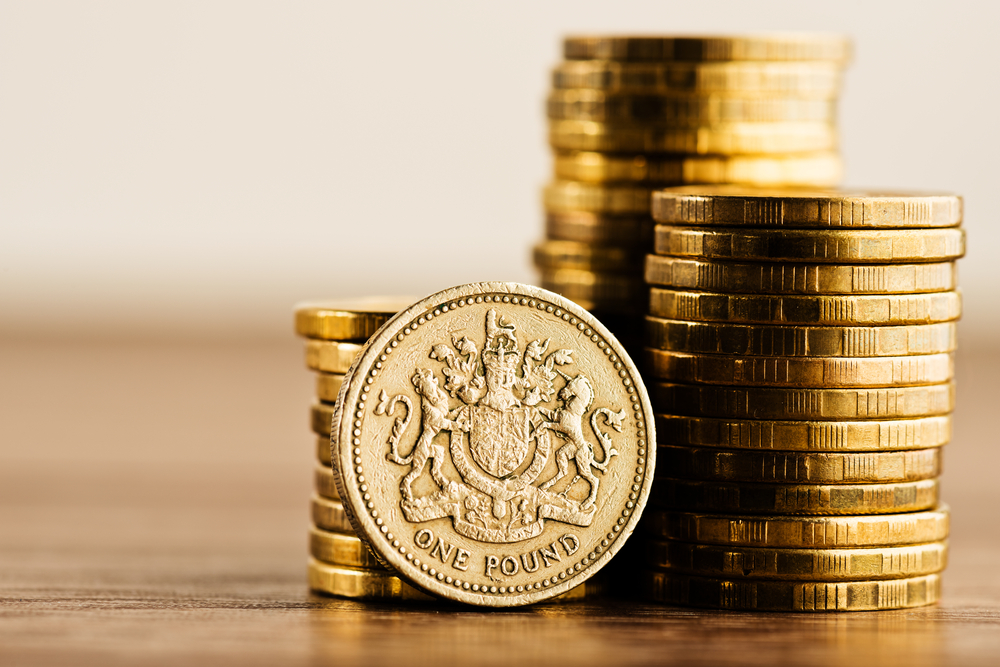
(Alliance News) - Once an outlandish prospect, pound and dollar parity is something cable traders are now hugely mindful of, as sterling creeps ever closer to following the euro to level-pegging the US currency.
Forex.com analyst Matt Weller noted the pound and dollar have never traded at parity. The closest they got was a tilt below USD1.10 in 1985. On Tuesday afternoon in London, the pound fetched USD1.1401.
"After spending the entirety of the 1800s at around 5:1, sterling has been trending generally lower against the greenback for the past century," Weller noted, adding that there are parallels between now and 1985.
Weller added: "Proving that history doesn't repeat but it does rhyme, the new UK Prime Minister Liz Truss’s role model, Margaret Thatcher, was in charge back then, and the US had passed large tax cuts under a Republican President (Reagan) a few years earlier that were starting to bear fruit on the underlying economy.
"Eerily, both the US and UK were grappling with elevated inflation in 1985, though the US was able to get a grasp on price pressures before its colonial overseer, much as traders and policymakers are expecting this time around. In addition, oil prices were normalizing after a sharp spike into the triple digits that led to rationing and calls for price caps."
The UK faces a higher risk than the US of seeing prolonged stagflation, a period of little to now growth coupled with rampant inflation, Weller said.
"The BoE recently predicted that the UK economy would see a prolonged recession and that inflation would peak above 13%; notably, that inflation forecast was before the UK government announced a plan to cap household energy prices that may put peak inflation closer to 11% in the island nation, but that is nonetheless higher than the US is expected to reach," Weller noted.
"While it may defray price pressures, the UK government's energy cap scheme risks blowing out the UK’s current account deficit further. As a reminder, the current account measures the total value of goods and services a country imports relative to the total value of goods and services it exports. After holding steady in the 1% to 5% of GDP range for decades, the UK current account recently widened to 8% in Q1 2022."
Should gas prices keep increasing due to Russia tapering deliveries to Europe, the cost of the energy cap scheme will soar. This could cripple the UK's coffers and hit sterling.
The belief that the pound and dollar will draw level is only increasing, Weller added.
"Once seen as fanciful, there is some evidence that FX options traders are at least considering the possibility of GBP/USD parity. According to NatWest, current options pricing implies a roughly 25% chance that GBP/USD could hit 1.00 in the next 12 months; similar calculations by Bloomberg put the implied probability closer to 20%," the analyst explained.
"As outlined above, a continued rise in energy prices could speed the prospect along, as would stubbornly high inflation or a deep recession on the European continent. Technically speaking, GBP/USD is currently testing its Covid-lows near 1.1400, the last level of previous support until the 1985 closer to 1.0500. While still not necessarily the most likely path, a break below the 1985 lows would truly bring parity into play for the first time in the 200+ year history of the GBP/USD exchange rate."
By Eric Cunha; [email protected]
Copyright 2022 Alliance News Limited. All Rights Reserved.
Related Articles
Gold sparkles and may gleam more as interest rates move lower
(Alliance News) - Gold hit another record high on Friday, and a push to the USD2,600 an ounce mark could...

Marlowe's planned occupational health demerger is "logical evolution"
(Alliance News) - Marlowe PLC's planned demerger of its occupational health division makes sense, German bank Berenberg believes, given the...

Flutter Entertainment deal in Brazil "not a surprise" — Shore
(Alliance News) - Flutter Entertainment PLC on Friday said it has agreed a deal which will see the firm join...