



Xi tightens grip at top of Communist party, worrying investors
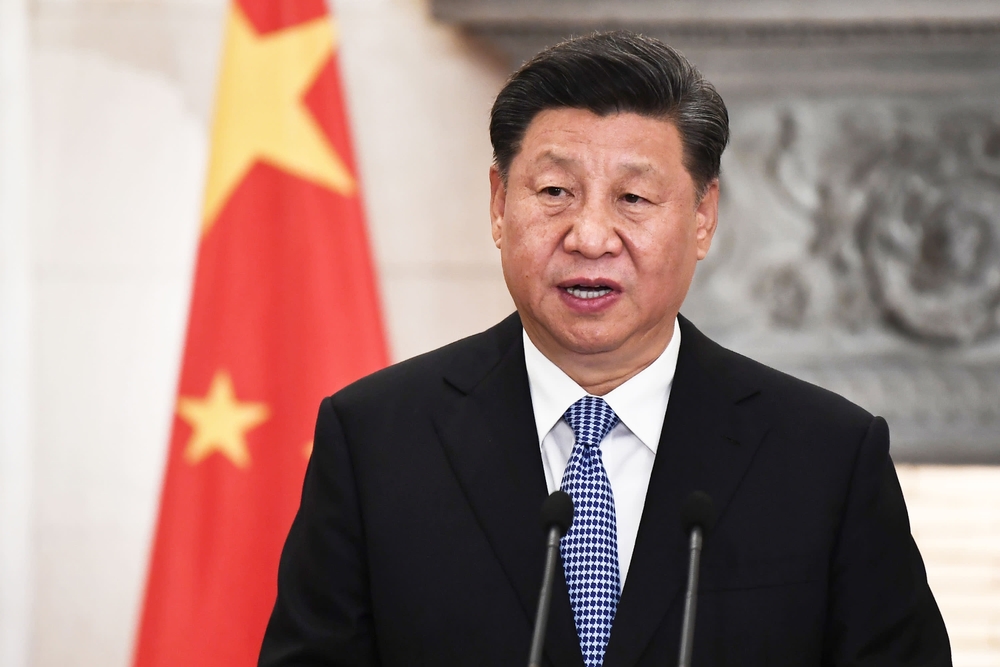
(Alliance News) - Xi Jinping - as expected - secured a rare third term as leader of ruling Communist party in China, signalling his grip on power has no end in sight.
The decision was made at a party Congress over the weekend, sending stock markets in China sharply lower on Monday. The Shanghai Composite closed down 2.0%, while the Hang Seng index in Hong Kong lost 6.7%.
Tech firms were among the worst hit in Monday's sell-off, having been hammered in recent years by Xi's crackdown on the sector that has scythed firms' profits and wiped billions off their valuations.
E-commerce giants Alibaba and JD.com tanked 11% and 13%, respectively, while Tencent lost 11%.
There was some surprise, however, with Xi stacking other leadership positions with proteges and allies.
"135 out of 205 central committee members were replaced in a major reorganization. Four of the Politburo Standing Committee were changed and will go into full retirement – Premier Li Keqiang, National People's Congress Chairman Li Zhanshu, Chinese People's Political Consultative Conference chairman Wang Yang and Vice Premier Han Zheng," Jefferies noted.
As a result, investors raised fears Xi and his allies would continue with gruelling Covid lockdowns and other policies that have punished the economy.
ING Greater China Chief Economist Iris Pang said: "China has a top government official team that is more concerted than before. This implies President Xi has even more say in policy direction.
"Liu He was once Xi's chosen economic advisor, educated in the West, not only responsible for China's external policy but also for plans for future growth. But Liu He did not have a political background, which is one of his weaknesses working in the government. After the past weekend, we know that Liu He has left the top government team."
ING does not believe there will be big policy changes ahead.
We do not think there will be big policy changes because most, if not all, existing policy decisions has been agreed with Xi. This applies to potential changes in the central bank governor, banking regulator and economic advisor.
Jefferies added: "The week-long Congress saw economic data releases delayed, while discussions over the ending of 'zero Covid' were unlikely to be ever part of a political assembly. Xinhua released the executive summary of the constitutional revisions, which noted that China was facing 'unparalleled complexity, gravity and difficulty' in its high growth profile and stability."
"Interestingly, Xinhua also highlighted that a new catchphrase 'Two Establishments' had appeared in discussions referring to Xi Jinping as 'core' leader whilst establishing his political doctrine [Xi Jinping Thought]. This marks a move away from 'Collective Leadership'," the investment bank continued.
In a speech to close the Congress on Saturday, Xi insisted his zero-Covid policy had been a success.
And he promoted Li Qiang, the architect of a two-month lockdown in Shanghai that crippled the financial hub's economy, to the second most powerful post in the Communist Party.
Monday also saw the release of delayed economic data - so it would not conflict with the Congress - which showed China's economy grew at a faster pace than forecast in the third quarter
The government announced the economy grew 3.9% year-on-year in the third quarter.
China had been expected to announce some of its weakest quarterly growth figures since 2020, with the world's second-biggest economy hobbled by Covid restrictions and a real estate crisis.
The third-quarter growth was higher than the 2.5% predicted by a panel of experts surveyed by AFP.
Car sales held strong in September, driven by strong demand for electric clean vehicles.
August exports increased 7.1% compared with the previous year, and Beijing has invested in infrastructure to support activity.
In the second quarter of the year, growth had collapsed to 0.4% on-year, the worst performance since 2020.
The country posted 4.8% growth in the first quarter of 2022.
Many economists continue to think China will struggle to attain its 2022 growth target of around 5.5%, and the International Monetary Fund has lowered its GDP growth forecast to 3.2% for 2022 and 4.4% for next year.
By Paul McGowan; [email protected]
Copyright 2022 Alliance News Limited. All Rights Reserved.
Related Articles

Gold sparkles and may gleam more as interest rates move lower
(Alliance News) - Gold hit another record high on Friday, and a push to the USD2,600 an ounce mark could...

Marlowe's planned occupational health demerger is "logical evolution"
(Alliance News) - Marlowe PLC's planned demerger of its occupational health division makes sense, German bank Berenberg believes, given the...

Flutter Entertainment deal in Brazil "not a surprise" — Shore
(Alliance News) - Flutter Entertainment PLC on Friday said it has agreed a deal which will see the firm join...